By Analyst Team · Updated 2026-07-16 · 9 min read
Are you tired of paying exorbitant cable bills for channels you never watch? You are not alone. Millions of viewers are cutting the cord and searching for a reliable ip-tv provider that delivers live TV, on-demand movies, and sports without the hefty monthly contract. This complete guide cuts through the noise and gives you everything you need to know before you commit to a single subscription.
Whether you are a sports fanatic desperate for a consistent ip-tv provider for sports, a budget-conscious family looking for the cheapest ip-tv subscription, or someone who has read dozens of ip-tv provider reviews Reddit threads and still feels confused — this article is your definitive starting point. We will explain how IPTV works, its honest pros and cons, how it stacks up against cable, and exactly how to get started today.
Ready to find your perfect match? Explore the offerings of a top-rated ip-tv provider that balances quality and affordability.
Check Top ip-tv provider Deals →What Is an ip-tv Provider Exactly?
An ip-tv provider is a service that delivers television content over the internet protocol (IP) network, rather than through traditional terrestrial, satellite, or cable formats. In plain English: instead of receiving broadcast signals via an antenna or a coaxial cable, your TV shows, news, and live sports arrive as data packets over your broadband connection — exactly like streaming a YouTube video, but on a much larger, channel-based scale.
The technology itself is called IPTV (Internet Protocol Television). It is a system where television services are delivered using the same internet infrastructure you already use for browsing the web. The key difference from services like Netflix or Hulu is that IPTV offers live, linear channels (often numbering in the thousands), including premium sports packages, international news, and pay-per-view events.
How a Reliable ip-tv Provider Differs from Streaming Services
It is a common misconception that IPTV is the same as streaming apps. While both use the internet, a dedicated ip-tv provider aggregates hundreds or thousands of live TV channels into a single interface that mirrors the traditional cable TV experience — channel guide included. Streaming services like Netflix or Disney+ are "on-demand" libraries, whereas a good IPTV service gives you a cable-like grid of scheduled programming.
LIMITED TIME AVAILABILITY
Unlock Full ip-tv provider Access
Unlock complete high-definition information and priority access packs. Lock in your pricing model today before plans return to standard regional metrics.
How an ip-tv Provider Works: Step by Step
Understanding the technical flow helps you make a smarter choice when comparing providers. Here is how the system operates from the moment you press "play" to when the image appears on your screen.
Step 1: Content Acquisition. The ip-tv provider sources live TV feeds from broadcasters and content distributors. These raw feeds are encoded into digital streams, often in MPEG-2 or H.264/H.265 formats, to compress the video for efficient internet delivery.
Step 2: Server Processing. The encoded streams are sent to powerful streaming servers. A professional provider uses a Content Delivery Network (CDN) — a globally distributed network of servers. This is critical for ensuring a reliable ip-tv provider no buffering experience, because the CDN routes your connection to the nearest server, reducing latency.
Step 3: Middleware & EPG. The provider's middleware organizes all these channels into a searchable Electronic Program Guide (EPG). This is the user interface you interact with on your TV, phone, or computer. It displays channel names, current and upcoming shows, and schedule data.
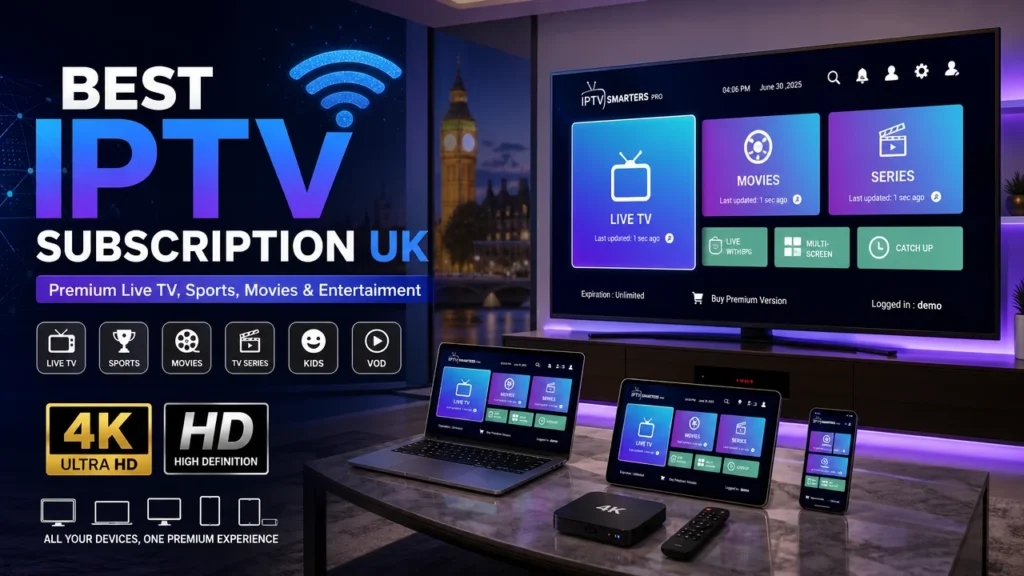
Step 4: Your Device & App. You install an IPTV player app (like TiviMate, IPTV Smarters, or VLC) on your device. You enter the M3U URL or Xtream Codes provided by your ip-tv provider. The app connects to the server and decrypts the stream, displaying the live TV on your screen.
This entire process happens in under a second on a good connection. The result is a seamless, cable-like experience that costs a fraction of traditional satellite TV. The best ip-tv provider services offer speeds of 4K resolution with minimal latency, especially for live sports where real-time delivery matters most.
Secure special promotional rates instantly before the window closes.
Activate Your ip-tv provider Subscription Now →Concrete Benefits of Choosing an ip-tv Provider
Switching from cable or satellite to an internet-based television service offers several tangible advantages. Here is what real users report after making the change.
Cost Savings. This is the number one reason people search for the cheapest ip-tv subscription. A standard cable package in the US or UK costs between $80 and $150 per month. A premium IPTV subscription ranges from $10 to $30 per month, often including thousands of channels and video-on-demand libraries. The annual savings can easily exceed $800.
Channel Variety. A good ip-tv provider offers 5,000 to 20,000+ channels from every continent. You get local news, international sports leagues, Bollywood movies, Arabic drama, European football, and American sitcoms — all under one subscription. No more paying for separate regional packages.
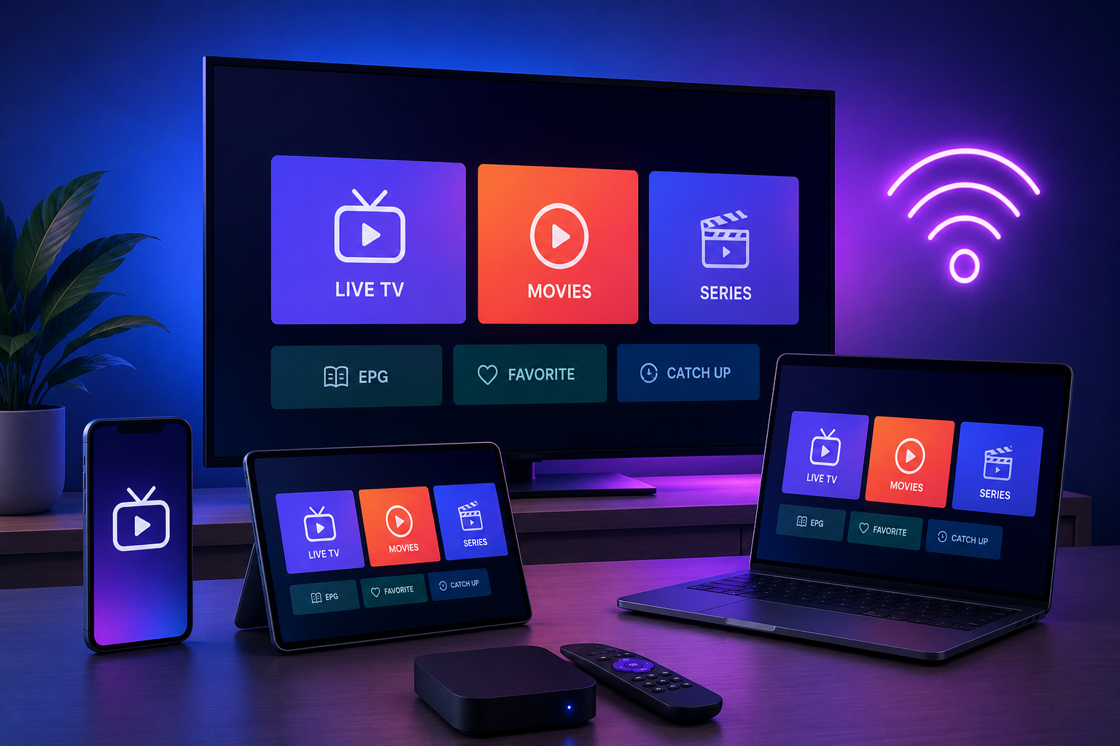
Multi-Device Flexibility. You are not tied to one television. IPTV works on Smart TVs (Samsung, LG, Android TV), Amazon Fire Stick, NVIDIA Shield, Apple TV, Android phones, iPhones, iPads, Windows PCs, and Macs. Most providers let you use 1 to 5 simultaneous connections, so the whole family can watch different content on different screens.
Superior Picture Quality. The best ip-tv provider services now offer 4K HDR streams for select channels. Because the content is delivered via the internet, the quality is limited only by your broadband speed — typically 25 Mbps is enough for 1080p, and 50 Mbps for 4K. This often exceeds the compressed quality of satellite TV.
Pros and Cons of ip-tv Provider Services
✅ Pros
- Dramatically lower monthly costs (80% less than cable)
- Access to 10,000+ international channels
- Watch on any device, anywhere with internet
- No long-term contracts or cancellation fees
- 4K and FHD streams on premium packages
- Video-on-demand libraries with latest movies
❌ Cons
- Requires stable, fast internet connection
- Some providers operate in legal gray areas
- Channel buffering on subpar servers
- EPG (guide) can be inaccurate occasionally
- VPN may be needed for privacy
- No physical remote support like cable
Honest Limitations You Must Consider
Every technology has its drawbacks, and IPTV is no exception. Being aware of these upfront will prevent frustration later.
Internet Dependency. Your entire TV experience hinges on your internet connection. If your ISP goes down, or if your Wi-Fi is unstable, you will face buffering, pixelation, or complete loss of service. This is unlike cable TV, which works independently of your internet. A minimum speed of 25 Mbps is strongly recommended for a reliable ip-tv provider no buffering experience.
Legal Ambiguity. While the technology IPTV is perfectly legal, many ip-tv provider services resell channels without proper licensing from broadcasters. This is a gray area in many jurisdictions. You should always research where you can buy ip-tv legally and verify that your provider has the necessary rights to distribute the content they offer, especially for premium sports and movie channels.
Technical Setup. Unlike cable TV which requires a simple plug-and-play box, IPTV often requires some initial configuration. You may need to install an app, enter server URLs, and configure an electronic program guide. While not overly complex, it does require basic digital literacy.
IPTV vs Cable TV: A Direct Comparison
To help you make a truly informed decision, here is an honest side-by-side comparison of a typical ip-tv provider versus a standard cable television subscription.
Who Is an ip-tv Provider Best For?
IPTV is not for everyone. Here are the specific user profiles that benefit the most from making the switch.
The Sports Enthusiast. If you follow multiple leagues — Premier League, NFL, NBA, UFC, La Liga, F1 — a single ip-tv provider for sports gives you all the channels (Sky Sports, ESPN, beIN Sports, DAZN) without paying for separate sports packages. You get multi-angle coverage and pay-per-view included in most premium plans.
The Expat or International Viewer. Living abroad often means missing home country television. An IPTV subscription gives you local channels from your home country — whether that is Indian, Filipino, Brazilian, or Arabic programming — no matter where you are physically located. This is one of the strongest use cases for where to buy ip-tv legally for expat communities.
The Budget-Conscious Household. Families looking to reduce monthly expenses without sacrificing entertainment will find the cheapest ip-tv subscription incredibly compelling. With a single $15–$25 monthly payment, the entire household gets live TV and movies on every screen.
The Cord-Cutter. If you have already abandoned cable but miss live event viewing — news, sports, award shows — IPTV bridges the gap between on-demand streaming and live linear television. It is the natural next step for anyone who wants both worlds.
How to Get Started with an ip-tv Provider: 6 Practical Steps
Starting your IPTV journey is easier than you think. Follow these numbered steps to go from zero to watching live TV in under 30 minutes.
Step 1: Select a Reputable Provider. Read recent ip-tv provider reviews Reddit threads and trusted blog comparisons. Look for a provider with a good average uptime (99%+), responsive customer support, and a trial period. Avoid any provider that requires a year-long upfront payment without a test option.
Step 2: Verify Internet Speed. Run a speed test at speedtest.net. You need at least 25 Mbps for stable HD streaming and 50 Mbps for 4K. If you plan to use multiple simultaneous streams, add 25 Mbps per additional connection. A wired Ethernet connection is always better than Wi-Fi for consistent performance.
Step 3: Choose Your Device. Decide where you want to watch. The most popular devices for IPTV are the Amazon Fire TV Stick 4K, NVIDIA Shield TV, and Android TV boxes. These are inexpensive, powerful, and easy to set up. For mobile viewing, any Android or iOS phone works.
Step 4: Install an IPTV Player App. Go to the app store on your device and search for "IPTV Smarters Pro," "TiviMate," or "VLC for Android." These are free, trusted apps that act as the interface between you and your ip-tv provider. TiviMate is widely considered the best player for its superior EPG and recording features.
Step 5: Enter Your Subscription Details. After subscribing to your chosen ip-tv provider, you will receive an email containing an M3U playlist URL or Xtream Codes (username, password, and server URL). Open your IPTV player app, select "Add Playlist," and paste the information exactly as provided.
Step 6: Configure and Enjoy. Once the channels load, customize your favorites list, set up your EPG (Electronic Program Guide), and start browsing. Most players allow you to hide unwanted channels, set parental controls, and even schedule recordings if your provider supports catch-up TV.
Final Subscription Window:
Main Offer Today →Affiliate Disclosure: Clicking this secure link verified by our network supports our team through standard partnership terms at zero extra cost to your invoice.
Frequently Asked Questions
1. What is the best ip-tv provider in 2026?
The best ip-tv provider 2026 varies by user need, but the top contenders typically offer 10,000+ channels, 4K streams, anti-freeze technology, and 24/7 support. Look for providers with strong uptime records and positive community feedback on forums. Always take advantage of a free trial to test channel stability during peak evening hours before committing.
2. How do I choose an ip-tv provider that won't buffer?
To choose an ip-tv provider with minimal buffering, prioritize those using a global CDN (Content Delivery Network) with servers in your region. Read recent user reviews about peak-time performance. A provider that offers a 24-hour trial lets you test buffering during your actual usage. Also, ensure your own internet speed is adequate — start with 50 Mbps.
3. Which ip-tv provider for sports has the best coverage?
The ideal ip-tv provider for sports includes channels like Sky Sports, BT Sport, ESPN, beIN Sports, DAZN, and local sports networks. Look for providers that clearly list their sports channel lineup on their website. Premium sports packages often include pay-per-view events like UFC and boxing. Check if they offer multi-language commentary options as well.
4. Where can I find a legitimate cheapest ip-tv subscription?
Finding the cheapest ip-tv subscription that is still reliable requires research. Extremely cheap services (under $5/month) often have poor uptime. A realistic budget-friendly range is $10–$15 per month for a solid HD service. Check deal sites and Reddit communities for discount codes. Avoid deals that seem too good to be true — they often disappear within weeks.
5. Are ip-tv provider reviews Reddit threads trustworthy?
Many ip-tv provider reviews Reddit discussions are genuine, but be cautious of astroturfing. Look for users who post specific details about channel quality, customer support response times, and real-world server performance. Accounts with very low karma or those that only post about one provider are often promotional bots. Cross-reference recommendations on multiple subreddits.
6. Where to buy ip-tv legally without risking account termination?
To buy ip-tv legally, research whether the provider holds proper distribution licenses for the content they stream. Legitimate providers are transparent about their licensing and often offer geo-restricted content with proper rights. Check if the provider is a registered business with a physical address. Using a VPN is still recommended for privacy, even with legal services.