By Analyst Team · Updated 2026-08-06 · 12 min read
Buying an IPTV subscription feels easy — until your stream buffers during overtime, your favorite sports channel disappears, or the provider stops answering emails. This buyer's guide explains how does IPTV work, what separates a dependable service from a frustrating one, and the exact criteria to verify before you enter your payment details.
Short on time? Jump straight to the 2026 provider comparison or the budget-based picks.
LIMITED TIME AVAILABILITY
Unlock Full how does iptv work Access
Secure special promotional rates instantly before the window closes. Lock in your pricing model today before plans return to standard regional metrics.
Why So Many People Regret Their First IPTV Subscription
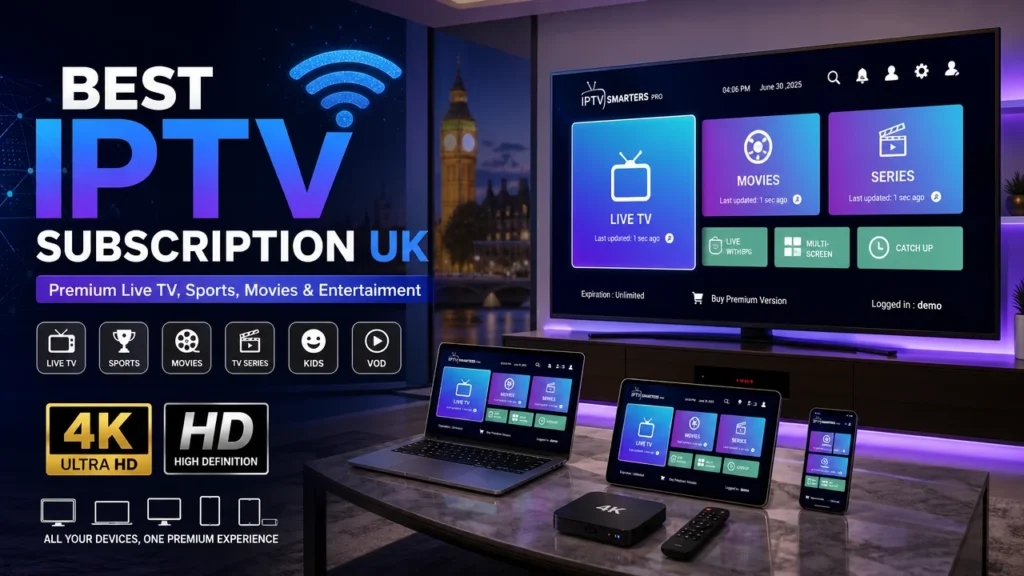
The setup shown in the image above looks polished — a smart TV, a remote, live sports in sharp resolution. That is exactly how every IPTV provider markets itself. The reality for many first-time buyers is different: channels that freeze during the 90th minute, a support chat that never replies, and an annual payment that vanishes when the service shuts down overnight.
The most common mistake is choosing a provider purely on price. A $5-per-month "all channels" deal sounds unbeatable, but you are not buying channels — you are buying server infrastructure, content licensing, and upkeep. When a provider undercharges, every one of those costs gets cut, and you feel it as buffering, downtime, and disappeared content.
Another regret pattern is buying an annual plan immediately. Many users who later discover the service does not work smoothly on their Firestick, Smart TV, or phone are stuck with a non-refundable yearly fee. Others fall for "lifetime" deals, which in the IPTV world often means "lifetime until the operator decides to rebrand."
How Does IPTV Work? The Tech Explained Without the Jargon
IPTV stands for Internet Protocol Television. Instead of receiving broadcast signals through a coaxial cable or satellite dish, your TV gets video content as data packets sent over the same internet connection you already use for browsing and streaming. An app or set-top box decodes those packets in real time and displays them as live channels or on-demand movies.
There are three common delivery models. Live television works like a broadcast channel, but the stream is unicast to your device. Video on demand (VOD) lets you pick from a library of movies and series, much like Netflix. Time-shifted TV lets you rewind or start a program that already aired. Most good IPTV subscriptions bundle all three inside one dashboard, which is why the interface and electronic program guide (EPG) matter so much.
For the buyer, the practical takeaway is simple: your internet connection quality directly determines picture quality and stability. A strong Wi-Fi signal might be fine for one 1080p stream, but 4K sports, multiple simultaneous viewers, and live events with high bitrates demand wired Ethernet or a solid 5GHz connection.
The Real Criteria That Should Drive Your IPTV Decision
Before comparing content catalogs, build your decision around five hard criteria. The premium plan shown above checks several of them visually — 4K labeling, multi-device icons, and a clear subscription structure — but you still need to verify each one yourself.
1. Device Compatibility
Knowing how does IPTV work on smart TV, Firestick, Android, iOS, or MAG boxes matters more than channel count. The best service for you is one with a stable native app for the hardware you already own. Web-based players are convenient but often lack EPG, recording, or multi-audio features. If you plan to watch on an older TV model, confirm whether the provider's app supports it before paying.
2. Server Capacity and Connection Stability
A provider with too many customers on too few servers will buffer exactly when you need it most. Look for services that publish their server load, offer multiple server locations, and mention capacity limits. Ask how many simultaneous connections your plan includes, and whether you can switch between servers in the app.
3. Content Licensing and Legal Standing
Your personal legal risk depends on your location and the content you access. Is IPTV legal in the US? The technology is legal; the delivery of unlicensed premium channels usually is not. A reputable seller explains what they offer and does not pretend to be an official cable replacement. If a provider avoids every question about licensing, treat that as a red flag rather than a bonus.
4. Customer Support Quality
IPTV services fail at some point for everyone. What separates a good experience from a nightmare is support response time. Test the provider's support during the trial: send a question at 11pm and measure how long the reply takes. Live chat, Telegram, and a ticketing system all beat a broken contact form.
5. Trial Period and Payment Flexibility
Never skip the trial. A 24-hour test pass costs almost nothing and tells you more than any review. Also check payment methods: PayPal or credit card offers buyer protection, while crypto-only or cash-app-only providers leave you with zero recourse.
Continue reading for the exact questions to ask and the warning signs that expose unreliable providers.
Unlock complete high-definition information and priority access packs.
Claim This Special Offer for how does iptv work →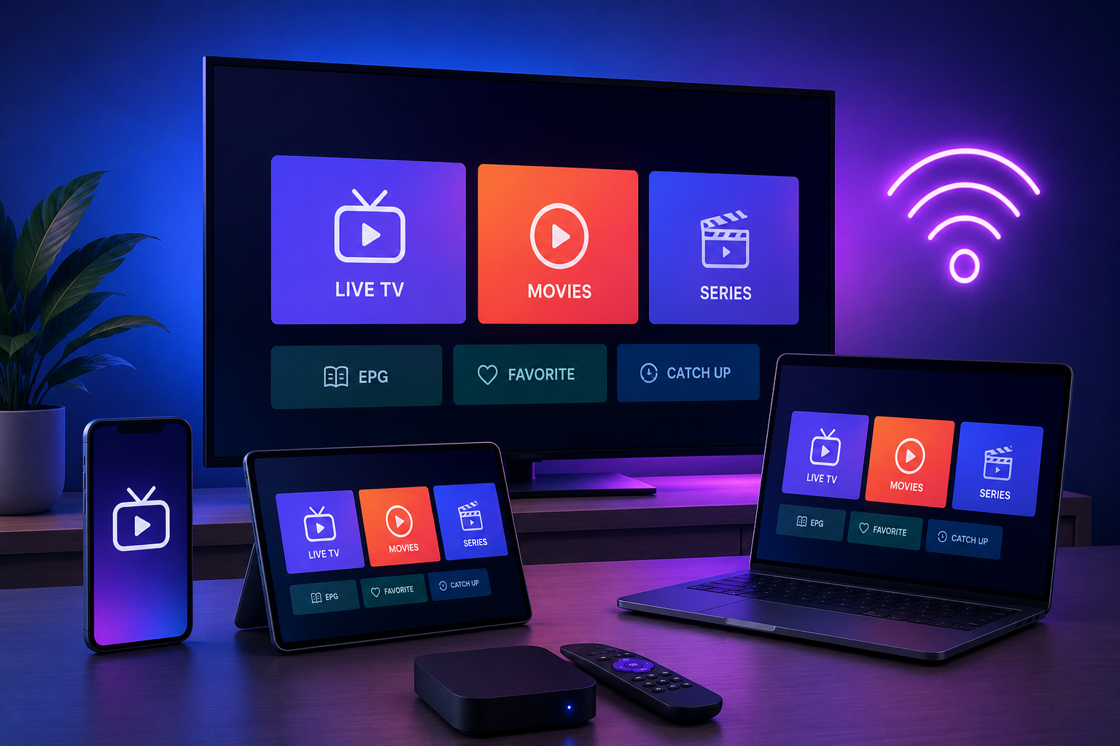
What You Should Know About the IPTV Market in 2026
The 2026 landscape looks different from a few years ago. 4K is now the expected default for major sports and movies, not a luxury add-on. Providers that once sold "everything for $10" have consolidated or disappeared, and the survivors are raising monthly prices to cover bandwidth and staff costs.
Another shift: the best IPTV service for live sports has become the main battleground. Football, boxing, UFC, and Formula 1 drive most subscription decisions. Buyers increasingly ask about match coverage, alternate commentary feeds, and catch-up replays rather than raw channel numbers. That is a healthy change, but it also means you should test a service during a real match you care about, not just during primetime movies.
Pricing is also becoming more standardized. You will typically see three tiers: budget ($8–$12), premium ($15–$25), and "professional" reseller packages aimed at businesses or power users. Annual discounts of 30–50% are common, but they carry the lock-in risk already mentioned. Given how quickly the market can shift, a monthly or quarterly plan remains the safer entry point.
Questions to Ask Before You Buy an IPTV Subscription
✓ Do you offer a free trial, and how many hours does it include?
✓ How many simultaneous connections are allowed per subscription?
✓ Which server locations can I connect to, and can I switch manually?
✓ What internet speed do you recommend for 4K live sports?
✓ Which devices are officially supported — Firestick, Smart TV, Android, iOS, MAG?
✓ Do you provide a setup guide or one-on-one installation help?
✓ What is the refund policy after the trial period?
✓ Does the VPN work with your service, or do you block VPN connections?
Write down the answers and compare them against the provider's actual behavior during the trial. A seller who responds instantly to these questions will also respond when your stream breaks at 2am.
Warning Signs That Should Make You Walk Away
✗ Prices below $5 per month for thousands of premium channels
✗ No trial, or a trial that requires your full credit card up front
✗ Support only through a private Telegram group with no ticket system
✗ Crypto-only payments and no refunds under any circumstance
✗ No mention of server capacity, downtime, or connection limits
✗ Vague answers about content licensing and legality
✗ Promises like "never buffers" or "guaranteed 4K for every channel"
None of these warnings automatically proves a scam, but together they signal an operation built for short-term profit. In the IPTV market, the cheapest option often ends up being the most expensive once you add the cost of lost time, frustration, and a vanished subscription.
IPTV Comparison: The Main Options at a Glance
To help you match a service type to your expectations, here is a practical comparison of the categories you will encounter in 2026. Keep in mind that individual providers within each category can vary widely, so the trial step still applies.
Notice where the value lies. If live sports in high definition is your priority, the premium tier usually pays for itself when you compare it to a cable sports bundle. If you only want occasional news and entertainment, the legal platform route removes all uncertainty for a few extra dollars per month.
Best IPTV Service Recommendations by Budget and Needs
Tight Budget: Start Monthly, Never Annual
If you can only spend around $10, choose a one-month premium trial at promotional pricing rather than a discounted annual budget plan. This gives you access to better servers and lets you evaluate the service during real live events. After 30 days you will know exactly what it is worth to you.
Sports Fans: Prioritize Server Stability Over Channel Count
The best IPTV service for live sports is not the one with the most channels; it is the one with the least latency during high-traffic matches. Ask the provider about their server locations near you, sports-specific streams, and whether PPV events are included at no extra cost. Also confirm that the EPG lists sports channels accurately, otherwise you will spend every weekend hunting for the right stream.
Families: Multi-Screen Plans With Parental Controls
A household with several viewers needs simultaneous connections and separate profiles. Choose a provider that allows at least three streams on one subscription and includes parental controls or PIN locking on adult channels. Test all screens at the same time during peak evening hours — that is when shared-server weaknesses reveal themselves.
Firestick Users: Check the APK Before You Pay
The how to set up IPTV on Firestick process is simple when the provider offers a direct APK download or a custom app. Ask whether the app supports TiviMate-style guides, catch-up, and recording. Firestick's Wi-Fi chip is decent but not great, so plan to use Ethernet through a micro-USB adapter if the device sits close to your router.
How to Maximize Your IPTV Investment
Once your subscription is active, the quality of your experience depends on your setup more than on the provider. Start with a speed test on the actual streaming device. You want at least 25 Mbps per 4K stream and a stable ping below 40ms. If Wi-Fi is weak, run Ethernet to the TV or Firestick.
The dashboard shown above is a good model: a clear EPG, search function, and organized movie menus. To get that kind of layout, use an IPTV player that suits your hardware. TiviMate is popular for Firestick and Android boxes; IINA and GSE Smart IPTV work well for Apple users. A good player also lets you set a default live channel list, which speeds up normal viewing.
If buffering appears, follow this IPTV buffering fix guide step by step: restart the app, force stop and clear cache, switch to a different server in the provider's portal, lower the stream quality temporarily, and test with a VPN to rule out ISP throttling. If none of that helps, the provider is overloading its servers — and that is your sign to switch.
Finally, protect your privacy with a VPN, especially if your provider operates in a legal gray area. Choose a VPN with a smart DNS feature so the connection does not degrade your stream quality while it encrypts your traffic.
Final Subscription Window:
Main Offer Today →Affiliate Disclosure: Clicking this secure link verified by our network supports our team through standard partnership terms at zero extra cost to your invoice.
IPTV vs Cable: Pros and Cons
The old "IPTV vs cable — which is better" question does not have a universal answer. It depends on your tolerance for setup, your internet quality, and how much you value legal certainty.
✓ IPTV Advantages
- Up to 80% cheaper than cable bundles
- Watch on Smart TV, Firestick, phone, laptop, tablet
- No contracts or cancellation fees
- Massive international channel libraries
- VOD + live TV in a single app
- Catch-up and recording features
✗ IPTV Disadvantages
- Legal gray areas with unlicensed content
- Buffering depends on your internet + their servers
- Historical or local sports coverage can be weak
- Providers can disappear without notice
- No official warranty or consumer protection
- Setup requires patience, especially on Firestick
Frequently Asked Questions
1. How does IPTV work on a smart TV?
Most smart TVs run Android TV, webOS, or Tizen, so IPTV works through a dedicated app that reads an M3U playlist or Xtream Codes from your subscription. You enter the server URL, username, and password into the app, and it pulls live channels and VOD over your internet connection. The TV does not need to be "IPTV-ready" — only app-compatible and online. Some providers also ship custom APKs that work natively on Android-based televisions.
2. How does IPTV work on a Firestick?
Firestick runs a modified Android OS, so you install an IPTV app either from the Amazon Appstore or by enabling "apps from unknown sources" and sideloading an APK. After entering your subscription credentials, the app builds your live channel list and VOD library from the provider's server. A player like TiviMate adds favorites, EPG, and recording options. Because most Firesticks are Wi-Fi-only, a stable router and adequate bandwidth are essential to avoid buffering.
3. Is IPTV legal in the US?
The technology itself is legal — IPTV is simply how video is delivered over the internet, and many legitimate services use it. What becomes illegal in the US is the resale or streaming of copyrighted content without authorization. If a provider sells premium US sports networks for $10 a month, it is almost certainly unlicensed. Legal IPTV services exist, but the buyer is responsible for verifying content licensing. A VPN does not make an unauthorized stream legal.
4. Which is better — IPTV vs cable?
IPTV wins on price, channel volume, device flexibility, and features like catch-up TV; cable wins on unconditional reliability, consumer protection, and legal peace of mind. If you only care about popular broadcast channels and zero setup effort, cable or a legal streaming bundle like YouTube TV is safer. If you are comfortable troubleshooting and want thousands of international channels for a fraction of the cost, IPTV delivers far better value. Choose based on your risk tolerance and technical confidence.
5. Where to buy a reliable IPTV subscription?
Look for providers that offer an active trial, transparent pricing, and responsive support through live chat or a ticketing system. Reliable sellers publish server status, list major sports coverage, provide setup guides, and accept PayPal or credit cards rather than crypto-only. Check recent IPTV communities and review threads for the latest recommendations, but always test any service yourself during peak evening hours. Start with a one-month plan and only renew after verifying consistent quality. A verified option that meets these criteria is available on the official offer page linked earlier.
6. Why does my IPTV keep buffering and how can I fix it?
Buffering usually comes from insufficient bandwidth, overloaded provider servers, or weak hardware. Run a speed test on the actual device — you need at least 25 Mbps per 4K stream and, ideally, a wired Ethernet connection. If speed is fine, restart the IPTV app, clear its cache, and switch to a different server in the provider's portal. A VPN can also help if your ISP is throttling streaming traffic. If buffering still happens every evening, the provider's infrastructure is the bottleneck and you should switch.
7. Is IPTV worth buying in 2026? What do Reddit reviews say?
Recent IPTV review threads on Reddit consistently show that IPTV is worth it only if you buy short subscriptions and accept some instability. Users praise the channel counts and sports coverage but warn about providers vanishing and price hikes after a few months. The most common strategy in those threads is keeping a backup provider or combining IPTV with an inexpensive legal streaming service for critical events. In short: great value for budget-conscious sports fans, frustrating if you want a zero-hassle experience.
8. What internet speed do I need for IPTV with live sports in 4K?
Providers usually recommend 20–30 Mbps per 4K stream, but latency and packet loss affect live sports more than raw speed. Aim for a wired connection or a strong 5GHz Wi-Fi signal with at least 50 Mbps available if other devices share the network. Each additional simultaneous viewer adds roughly 10 Mbps of demand. If your ISP routes poorly to the provider's servers, a VPN can improve stability even when your speed test looks perfect.